PRESIDENTIAL PASTIME

The Baseball History of the American Presidency

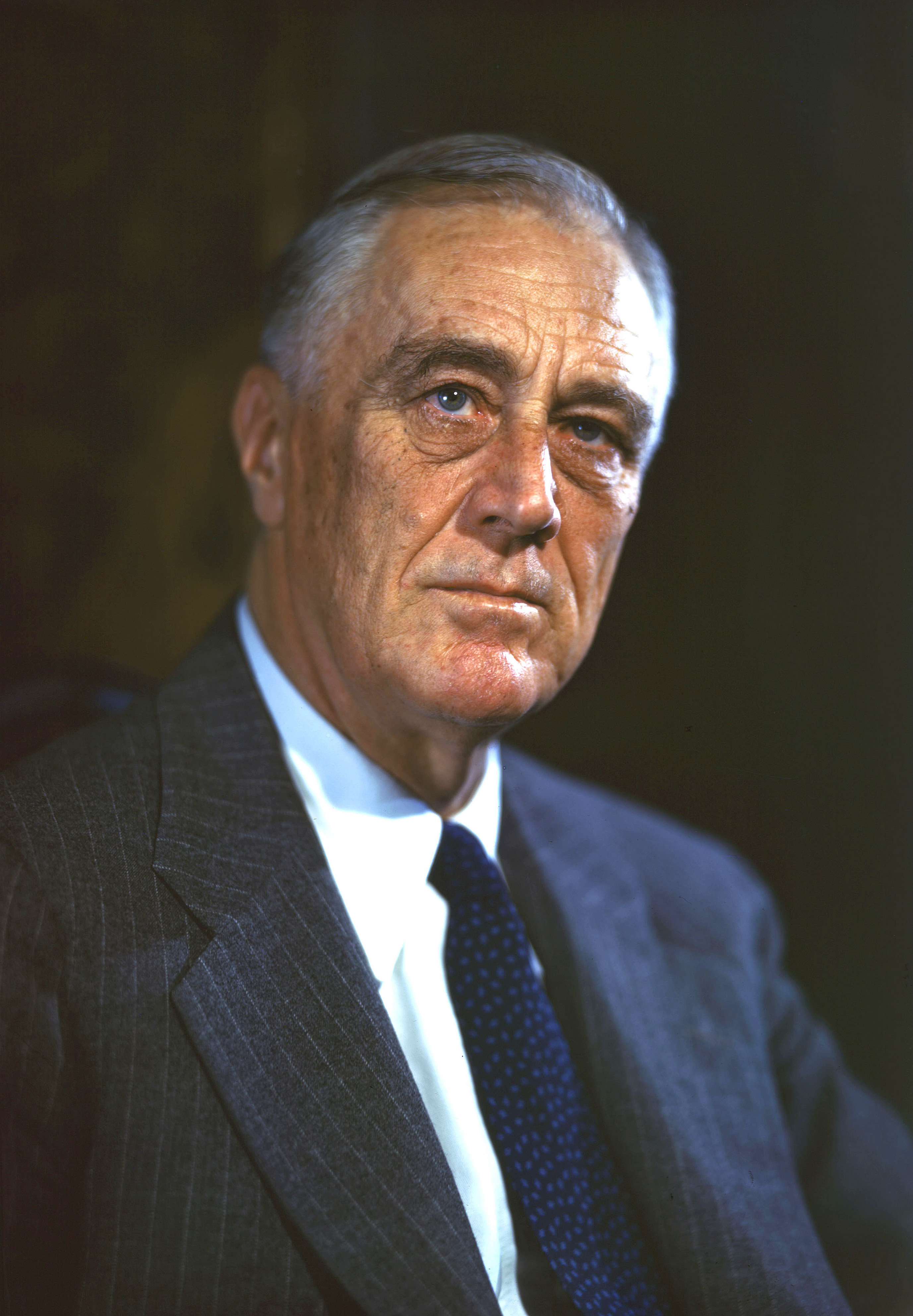
Portrait of Franklin D. Roosevelt

Presidential Baseball Profile

Franklin D. Roosevelt

President No. 32 • 1933–1945

President

No. 32

Years

1933–1945

Baseball Era

Depression and World War II

Throwing Hand

Right

The Baseball President

Franklin D. Roosevelt and America's Pastime

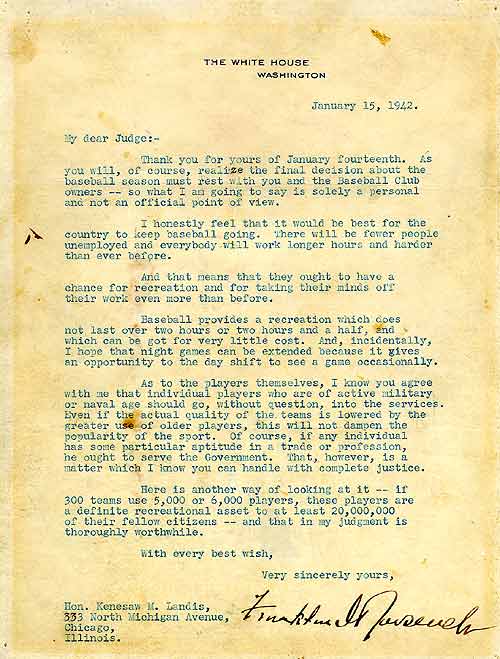
Franklin D. Roosevelt served as president during the Great Depression and World War II, becoming one of the most consequential presidential figures in baseball history. A devoted follower of the national pastime, Roosevelt maintained the White House tradition of ceremonial first pitches at Washington Senators games, delivering eight Opening Day pitches during his presidency. He also witnessed a remarkable generation of players, including Babe Ruth, Lou Gehrig, Joe DiMaggio, and Hank Greenberg. On July 7, 1937, Roosevelt became the first sitting president to attend a Major League Baseball All-Star Game, watching the American League defeat the National League at Griffith Stadium. His most enduring contribution came after the United States entered World War II. On January 15, 1942, he wrote Commissioner Kenesaw Mountain Landis to express his belief that professional baseball should continue during wartime. Known as the Green Light Letter, his message recognized baseball's importance to the morale of Americans working and serving during the national emergency. Although thousands of professional players entered military service, organized baseball continued throughout the war. Roosevelt's legacy connects the presidency, America's national pastime, and the country's determination to preserve ordinary life during extraordinary circumstances.

Presidential Baseball Timeline

Franklin D. Roosevelt's Baseball History

1933–1941

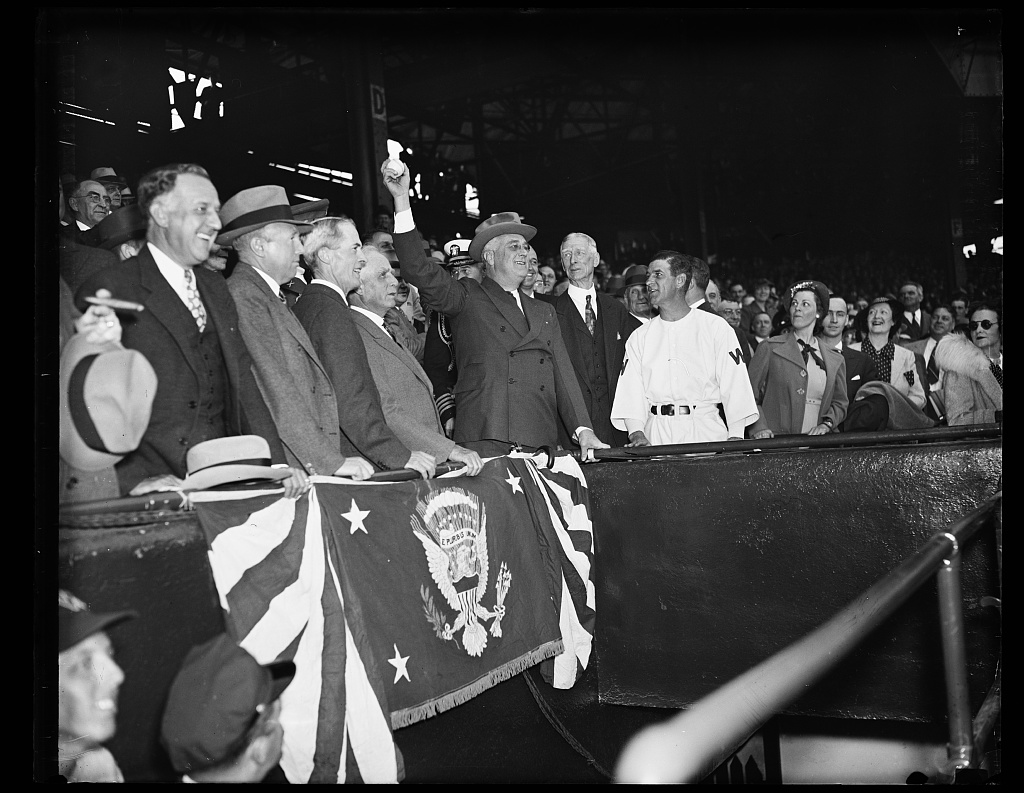
Eight Presidential Opening Day First Pitches

Roosevelt continued the ceremonial first-pitch tradition at Washington Senators games, throwing eight Opening Day pitches during his presidency. His appearances helped maintain a visible connection between the White House and America's national pastime.

View source ↗
January 23, 1937

Roosevelt Describes His Ideal Baseball Game

In a letter to the Baseball Writers' Association of America, Roosevelt described his preference for high-scoring games and exciting action over low-scoring pitchers' duels. The letter provides an unusually personal glimpse into his enthusiasm for baseball.

View source ↗
July 7, 1937

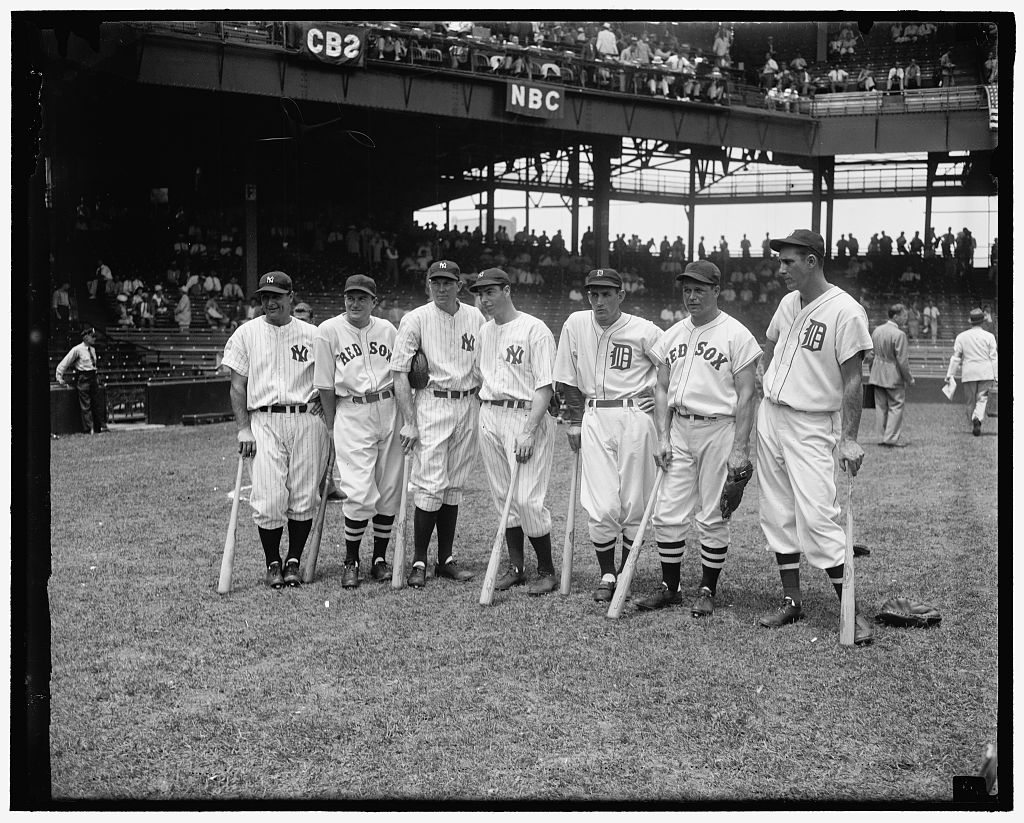
The First President at an All-Star Game

Roosevelt became the first sitting president to attend Major League Baseball's All-Star Game. At Griffith Stadium in Washington, the American League defeated the National League 8–3. Lou Gehrig hit a two-run home run, while a line drive fractured pitcher Dizzy Dean's toe.

The First President at an All-Star Game — archival illustration
View source ↗
April 19, 1937

Opening Day with Connie Mack

President Roosevelt opened Washington's 1937 baseball season against the Philadelphia Athletics. He was photographed with Connie Mack, Clark Griffith, Bucky Harris, and presidential secretary Marvin McIntyre at Griffith Stadium.

Opening Day with Connie Mack — archival illustration
View source ↗
April 16, 1940

Opening Day at Griffith Stadium

Roosevelt threw the ceremonial first pitch before the Washington Senators faced the Boston Red Sox. The appearance became one of the best-documented images of his connection to professional baseball.

View source ↗
January 15, 1942

The Green Light Letter

Roosevelt responded to Commissioner Kenesaw Mountain Landis and encouraged professional baseball to continue during World War II.

View source ↗
January 15, 1942

The Green Light Letter Saves Wartime Baseball

Responding to Commissioner Kenesaw Mountain Landis after the attack on Pearl Harbor, Roosevelt expressed his personal support for continuing professional baseball during World War II. He believed Americans needed affordable recreation and relief from the pressures of wartime work. His celebrated Green Light Letter helped encourage baseball to continue throughout the war.

The Green Light Letter Saves Wartime Baseball — archival illustration
View source ↗