01
A President Arrives
President Taft arrived at Washington's ballpark with Vice President James S. Sherman and other dignitaries. The crowd welcomed the president to the Senators' season opener.
The Baseball History of the American Presidency
Presidential Pastime | Historical Exhibit No. 001
April 14, 1910 — The Day a Presidential Tradition Was Born
Discover the historic moment President William Howard Taft inaugurated a tradition connecting the White House and America's national pastime.
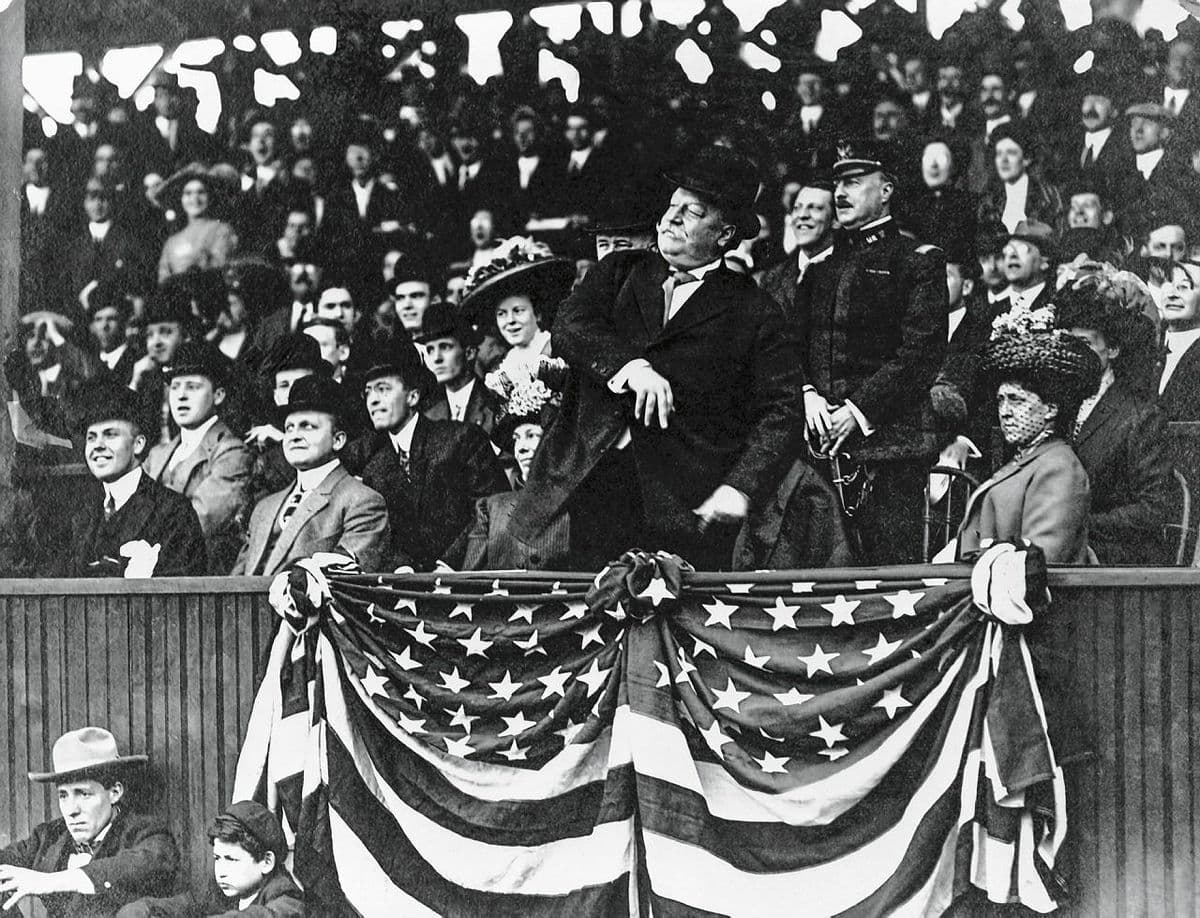
Washington, D.C. | April 14, 1910
One baseball. One president. A tradition that would span generations.
DATE
April 14, 1910
PRESIDENT
William Howard Taft
BALLPARK
National Park, Washington
ATTENDANCE
12,226
The Story Behind the Tradition
On a spring afternoon in Washington, D.C., President William Howard Taft stepped into baseball history. It was April 14, 1910, and the Washington Senators were preparing to open their American League season against Connie Mack's Philadelphia Athletics.
Before the game began, umpire Billy Evans approached the president's box and presented Taft with a new baseball. From his seat in the grandstand, the 27th president tossed the ball toward Washington's young pitching sensation, Walter Johnson.
It was a simple gesture, but its significance would grow far beyond that afternoon. Taft had become the first sitting American president to perform the ceremonial Opening Day first pitch, establishing a tradition that would connect the presidency with America's national pastime for generations.
Official Game Record | April 14, 1910
Washington
SENATORS
3
Philadelphia
ATHLETICS
0
9
STRIKEOUTS
1
HIT ALLOWED
9
INNINGS
Walter Johnson — Winning Pitcher | Eddie Plank — Losing Pitcher
From the Presidential Pastime Archives
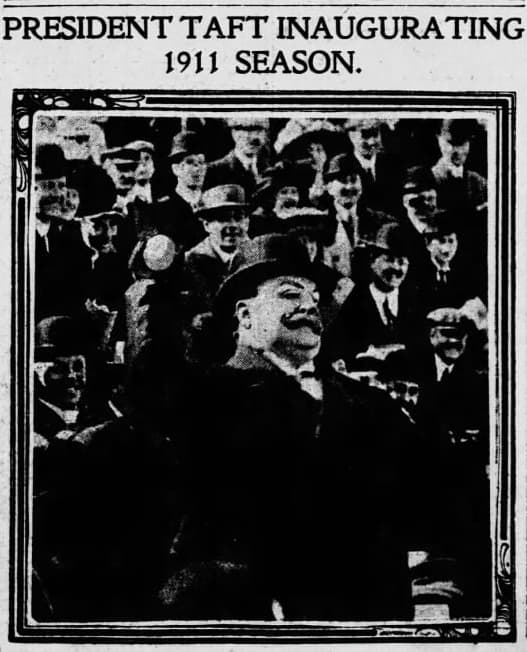
The Tradition Continues — 1911
Taft returned to Washington baseball on April 12, 1911, and again performed the ceremonial first pitch.
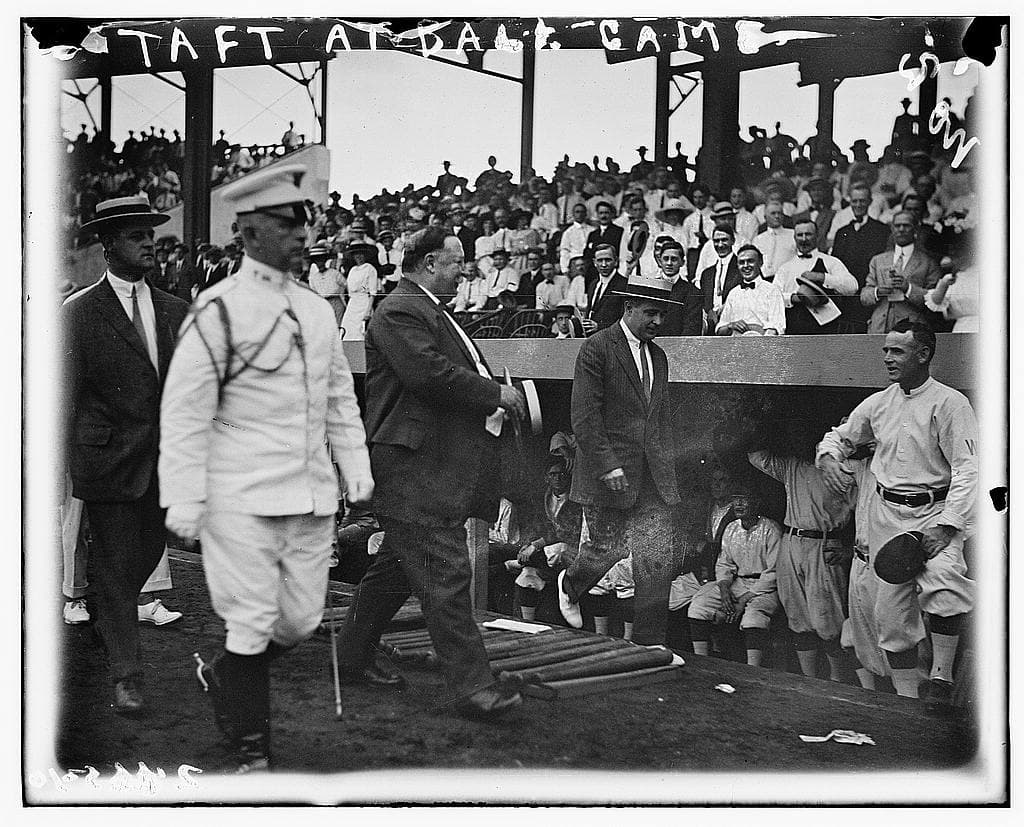
A Presidential Baseball Fan — 1912
Taft's enthusiasm for baseball extended beyond his historic 1910 appearance, reflecting a lasting connection to the sport.
Companion photographs represent Taft's broader baseball history; they are not presented as images of the April 14, 1910 ceremony. Individual photographic attributions should be confirmed against their original archival records.
The Historic Afternoon
President Taft arrived at Washington's ballpark with Vice President James S. Sherman and other dignitaries. The crowd welcomed the president to the Senators' season opener.
Umpire Billy Evans presented Taft with a new baseball. From his seat in the grandstand, Taft threw the ball toward Washington pitcher Walter Johnson, inaugurating a new presidential baseball tradition.
Walter Johnson dominated the Philadelphia Athletics. The 22-year-old pitcher surrendered just one hit, struck out nine batters, and completed a 3–0 shutout.
Johnson saved the ceremonial baseball and sent it to the White House for Taft's autograph. The president signed it with a personal message praising Johnson's pitching.
The Historic Baseball
The baseball used in Taft's first-pitch ceremony was not forgotten after the game. Walter Johnson had it preserved and requested the president's autograph. Taft signed the ball with a personal message celebrating Johnson's outstanding performance.
"For Walter Johnson, with the hope that he may continue to be as formidable as in yesterday's game."
— William Howard Taft, April 15, 1910
This inscription is documented in the Library of Congress account of Taft's correspondence. No substitute or reproduction baseball is shown here as the original artifact.
Unlike most modern ceremonial pitches, Taft threw the ball from his grandstand seat toward Walter Johnson.
Walter Johnson held Philadelphia hitless until the seventh inning, when Frank Baker doubled.
Taft's military aide Archibald Butt died aboard Titanic in 1912. In the aftermath of the tragedy, Vice President Sherman handled the presidential Opening Day ceremony.
The Presidential Legacy
What began with a baseball tossed from a grandstand in 1910 became a symbolic meeting of two American institutions: the presidency and the national pastime. Through wars, celebrations, triumphs, and changing generations, the ceremonial first pitch has remained a distinctive part of American baseball history.
Explore William Howard Taft's Presidential Profile →