AUGUST 12, 1994
The Strike Begins
Major League Baseball players walk off the field amid a bitter labor dispute with team owners.
The Baseball History of the American Presidency
THE HERITAGE COLLECTION · EXHIBIT 008
Bill Clinton, the Lost World Series & the Battle for America's National Pastime
The Heritage Collection · Exhibit 008
In 1994, America lost its World Series. In 1995, the President of the United States tried to bring baseball back.
232
Days of the strike
1994
World Series canceled
42nd
President of the United States
1994 · Baseball's Lost Summer
When the players walked off the field on August 12, 1994, some of baseball's greatest performances were frozen in time. These were the numbers left behind.
.394
Batting Average
Just six points shy of the legendary .400 mark.
74–40
Win–Loss Record
The best record in Major League Baseball.
43
Home Runs
Chasing Roger Maris's single-season record.
40
Home Runs
Another historic home run season cut short.
1.56
Earned Run Average
An extraordinary season for the Braves ace.
116
Runs Batted In
The National League MVP's remarkable total.
Tony Gwynn was pursuing baseball's first .400 season since Ted Williams hit .406 in 1941. Matt Williams was threatening Roger Maris's single-season home run record of 61. And the Montreal Expos, led by a remarkable young roster, held baseball's best record.
None of those stories received a proper ending. The strike canceled the postseason and the World Series, leaving one of baseball's greatest collections of unanswered questions.
Historical sources: Society for American Baseball Research (SABR), National Baseball Hall of Fame and Museum, and 1994 MLB statistical records.
The Photographic Record
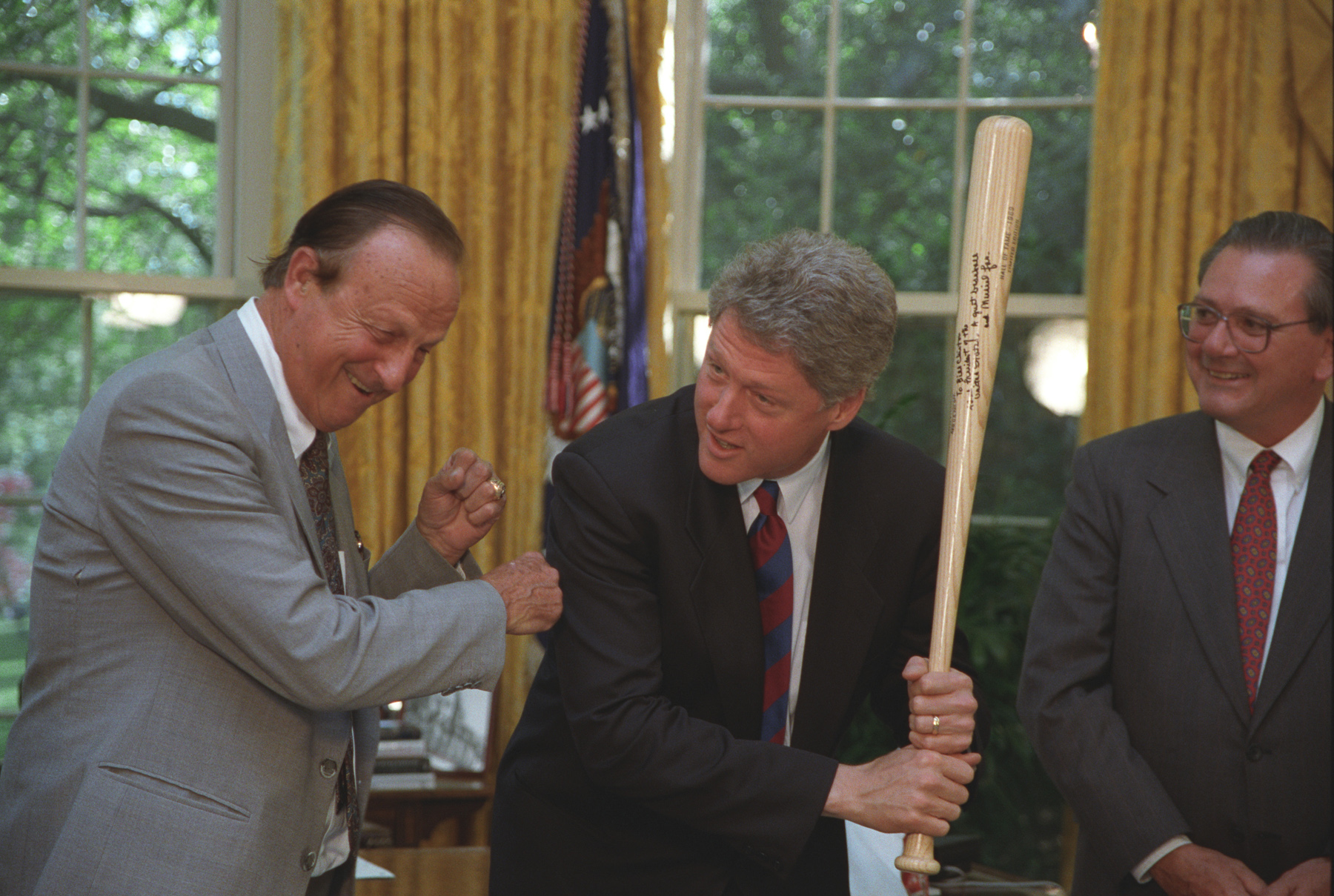
MAY 6, 1993
President Clinton poses in the Oval Office with a baseball bat presented by Hall of Famer Stan Musial.
White House Photograph Office / Clinton Presidential Library · Public domain
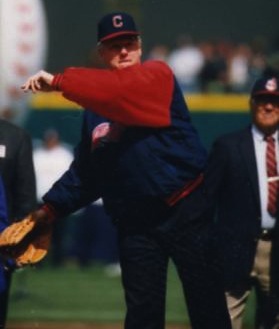
APRIL 4, 1994
Clinton throws the ceremonial first pitch at Jacobs Field in Cleveland, four months before the players' strike.
White House Photograph Office / Clinton Presidential Library · Public domain
The White House · February 7, 1995
“The American people are the real losers”
President Bill Clinton
The Historical Record
AUGUST 12, 1994
Major League Baseball players walk off the field amid a bitter labor dispute with team owners.
SEPTEMBER 14, 1994
The remainder of the season is canceled. Montreal's remarkable season ends, and Tony Gwynn finishes at .394.
JANUARY 26, 1995
Bill Clinton presses owners and players to resolve their dispute and calls for progress by February 6.
FEBRUARY 7, 1995
Clinton brings representatives of both sides to the White House. The negotiations end without an agreement.
FEBRUARY 1995
Clinton proposes federal legislation establishing a binding arbitration panel to settle the baseball dispute.
APRIL 1995
Following federal court intervention, the players return and a shortened major league season begins.
Presidential Document · February 1995
President Clinton proposed legislation that would establish a three-member arbitration panel with authority to impose a binding settlement between Major League Baseball's owners and players.
Congress did not enact the proposal. Baseball eventually resumed after federal court intervention, leaving Clinton's attempted settlement as a remarkable episode in presidential and baseball history.
Read the Original Presidential DocumentFew presidents have become so directly involved in the business of America's national pastime. Clinton's intervention demonstrated both baseball's cultural importance and the limits of presidential influence.